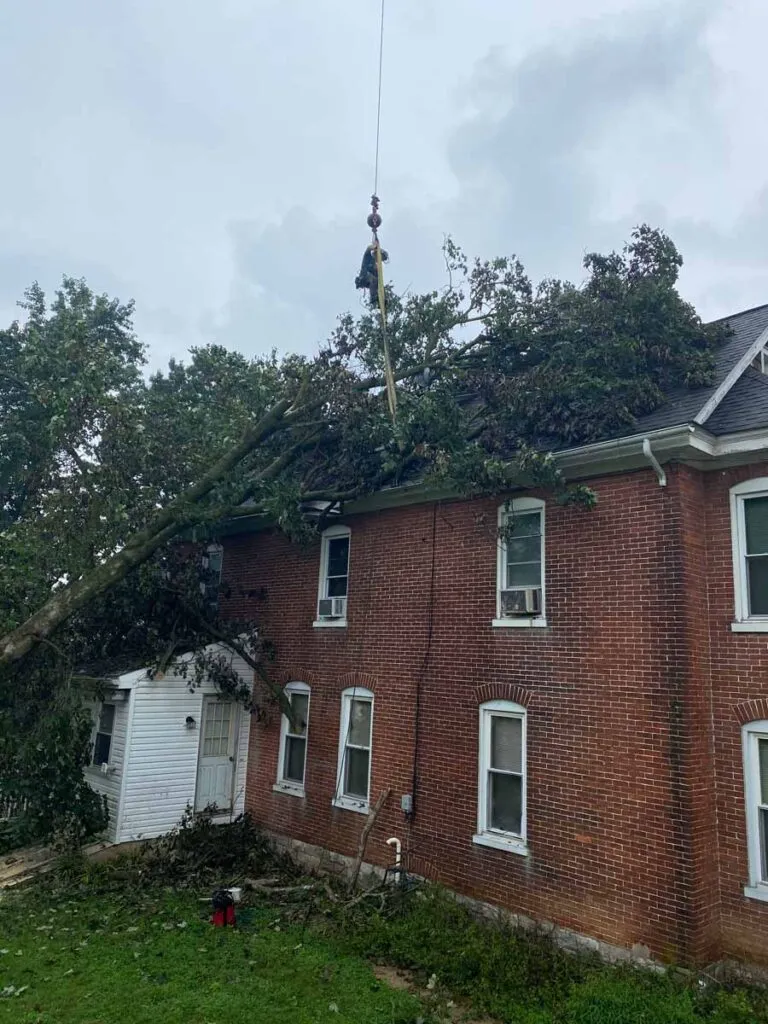
A tree falling on your roof is one of those moments where panic makes sense. It is loud, sudden, stressful, and potentially dangerous. But once the initial shock passes, what you do next matters.
Whether the tree came down during a thunderstorm, high winds, saturated soil conditions, or unexpected limb failure, the priority is the same: keep people safe first, then protect the home from further damage, then get the right professionals involved.
If a tree has fallen on your roof in Lancaster, PA, here are the steps to take.
Step 1: Make Sure Everyone Is Safe If a Tree Falls on Your Roof
Before you think about the roof, the tree, the cleanup, or the insurance claim, make sure everyone in the home is safe. Move people and pets away from the damaged area, especially if there is visible roof damage, broken glass, water coming in, ceiling sagging, or cracking sounds.
If there are injuries, a fire risk, a gas smell, or major structural damage, call 911.
Do not go into the attic or damaged rooms to see how bad it is. A tree on a roof can shift, branches can continue breaking, and damaged ceilings or rafters may not be stable.
Step 2: Stay Away From Power Lines
Storm-damaged trees and utility lines are a dangerous mix. If the tree is touching power lines, if lines are down in your yard, or if you are not sure whether wires are involved, stay far away.
The Pennsylvania Emergency Management Agency’s Ready PA storm guidance advises residents to watch for fallen power lines and trees after storms, stay away from downed lines, and report hazards.
Learn more from Ready PA here.
Do not try to move branches off wires. Do not drive over downed lines. Do not touch anything that may be in contact with a power line, including fences, branches, or standing water nearby.
Step 3: Call an Emergency Tree Service
Once everyone is safe and utility hazards are avoided, call a professional tree service. A tree on a roof is not a normal cleanup job. It often requires careful rigging, controlled cutting, and the right equipment to remove weight from the structure without causing more damage.
Reaching Higher provides emergency tree service in Lancaster and surrounding areas. If a tree has fallen on your home, call 717-502-4707.
Step 4: Do Not Start Cutting the Tree Yourself
It may be tempting to grab a chainsaw and start cutting branches to take some weight off. That can actually be extremely dangerous.
A fallen tree may be under tension, meaning limbs and trunk sections can spring, roll, or shift once cut. If part of the tree is resting on the roof, cutting the wrong section first can transfer weight suddenly and cause additional structural damage.
DIY cutting is especially risky when:
- The tree is on the roof or against the house
- Limbs are hanging or suspended
- The trunk is split or twisted
- Utility lines are nearby
- The tree is large or partially uprooted
- You cannot clearly see how the weight is distributed
This is the kind of job where experience matters. A professional crew can assess how the tree is loaded and remove it in a controlled sequence.
Step 5: Take Photos From a Safe Distance
If you can safely do so, take photos and videos before cleanup begins. You do not need to climb on the roof or walk under the tree. Stand back and document what you can from the ground.
Helpful photos may include:
- The tree on the roof
- The full tree from a distance
- Broken limbs or trunk damage
- Roof damage you can see safely
- Damage to gutters, siding, fences, vehicles, or outdoor structures
- Any blocked access points, such as the driveway
These photos may help with insurance documentation and can also help the tree crew understand the situation before arriving.
Step 6: Contact Your Insurance Company
After the immediate safety concerns are handled, contact your homeowner’s insurance company to start the claim process. They may ask for photos, details about when the damage happened, and documentation from the tree service or roofing contractor.
A tree service can remove the tree safely, but you may also need a roofer or restoration contractor depending on the extent of the roof damage. If water is getting into the home, temporary tarping may be needed after the tree is removed and the roof can be safely accessed.
Step 7: Have Nearby Trees Assessed
When one tree fails during a storm, it is worth looking at the others nearby. Sometimes the fallen tree was an isolated issue. Other times, it points to a larger problem on the property: saturated soil, root damage, decay, weak branch unions, or trees that have been stressed for years.
After the emergency is handled, ask whether nearby trees show warning signs such as:
- Dead or hanging limbs
- A new or sudden lean
- Cracks or cavities in the trunk
- Fungal growth near the base
- Weak unions or split-prone stems
- Root plate movement
- Storm-damaged limbs still caught in the canopy
A follow-up assessment can help reduce the chance of another emergency later in the season.
Can a Tree on a Roof Be Removed Without More Damage?
Often, yes, but it depends on the situation. The safest approach depends on the tree size, how it landed, how much weight is on the roof, whether the trunk is still attached, and whether utilities or access issues are involved.
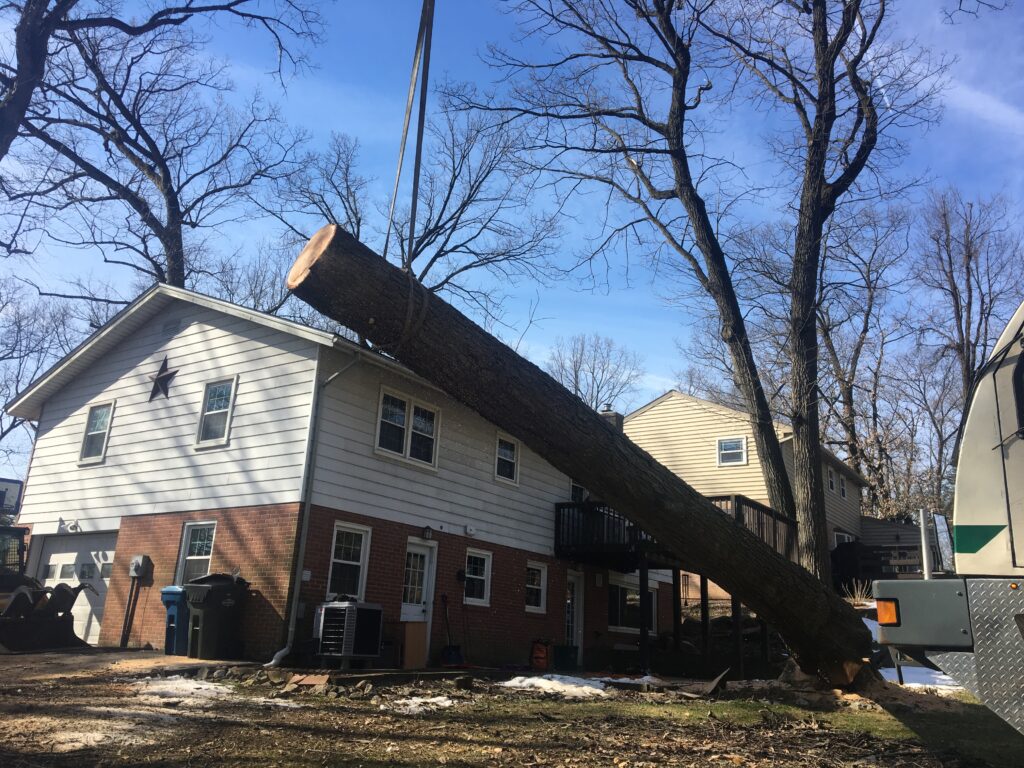
Large trees, steep roofs, tight backyards, and limited access can make the work more complex. That is where Reaching Higher’s experience with big trees and difficult access can make a real difference. The goal is to remove the tree in a controlled way while reducing additional impact to the home and surrounding property.
Lancaster Storms Can Turn Tree Problems Into Emergencies Fast
In Lancaster County, summer storms can bring heavy rain, wind, lightning, and saturated ground. Trees with hidden decay, weak unions, buried root flares, or root problems may hold up for years until the wrong storm exposes the issue.
If a tree has already fallen on your roof, treat it as an emergency. If you are worried about a tree near your home before the next storm, that is also worth addressing now.
Has a Tree Fallen on Your Roof in Lancaster, PA?
Stay safe, stay away from wires, and do not try to cut the tree yourself. Reaching Higher can assess the situation, remove the tree safely, and help you take the next step toward restoring your property.