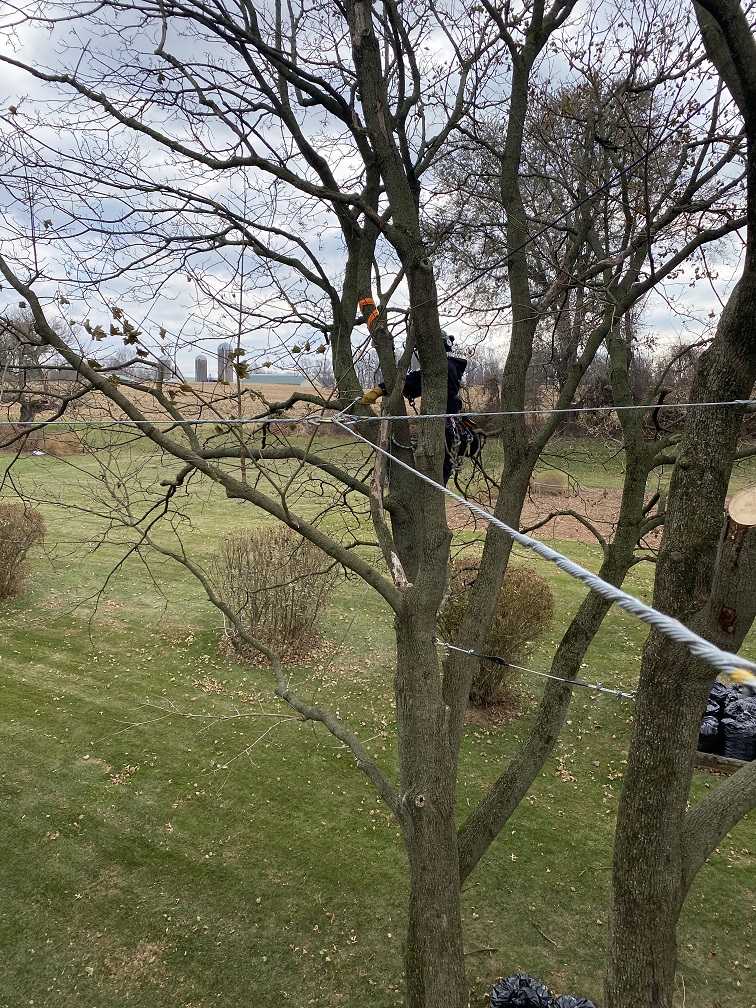
Some trees develop structural issues that make them more likely to fail in storms or high winds. Cabling and bracing can help reduce risk by providing supplemental support to weak areas of a tree.
Reaching Higher can assess your tree and recommend whether cabling and bracing is a good option, or if other solutions such as pruning or removal would be safer.
Tree cabling and bracing refers to support systems installed in a tree to help reduce movement and stress on weak unions, heavy limbs, and areas with cracking or poor structure.
These systems are most effective when paired with proper pruning and ongoing monitoring.
In order to prevent potential damage and ensure tree health, it is important to look out for warning signs. Here are some situations where cabling and bracing may be required:
If any of these signs are present, give Reaching Higher a call. Our skilled arborists will inspect your trees to diagnose any structural deficiencies that present a risk to your tree and surrounding property. We will then advise you if your tree can benefit from a support system like cabling, bracing, or staking.
In determining the best course of action for an ailing tree, our tree doctors weigh the risks and rewards. At times, a tree is so weak that it is beyond the point where a support system can offer any benefit; in such cases, we recommend tree removal.
Cabling and bracing is not a set it and forget it solution. These support systems should be installed appropriately and monitored over time, and pruning may still be necessary.
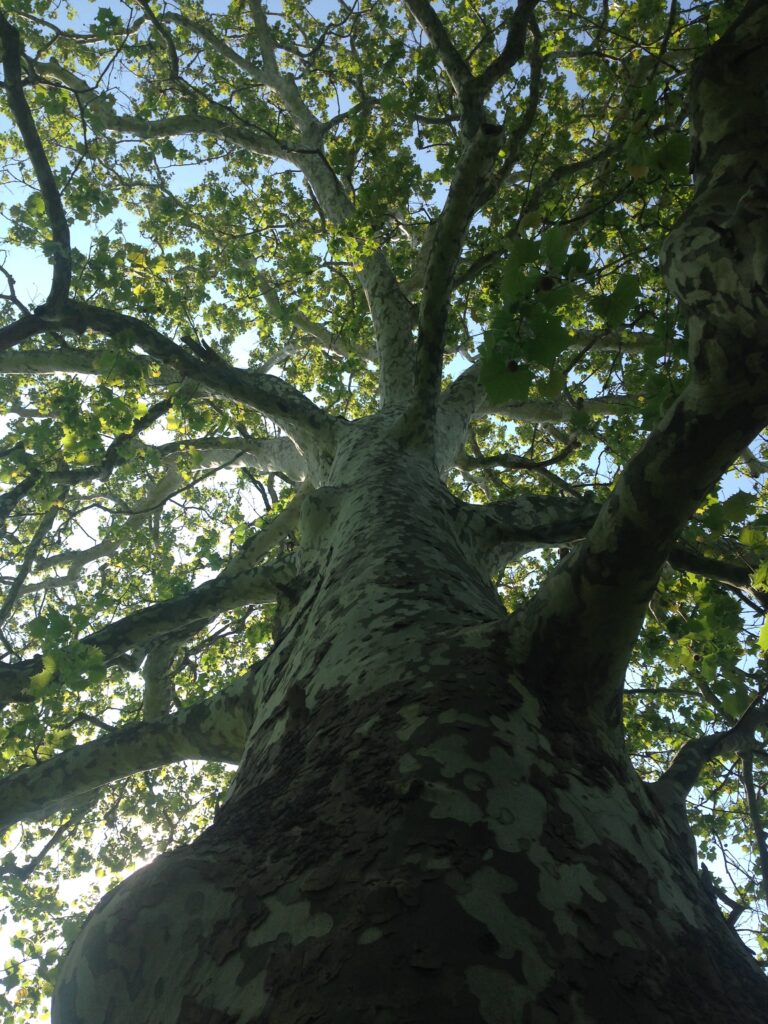
We begin with an on-site assessment to determine the best path forward.
What to expect:
When used appropriately, cabling and bracing can be a practical way to reduce risk and preserve a tree.
The cost of tree cabling and bracing services in Lancaster and Chester counties varies widely depending on several factors such as the size and number of trees, location, and the complexity of the job at hand.
On average, homeowners can expect to pay between $350 to $600 per tree for a professional tree cabling and bracing service. More complex jobs or those involving larger trees may cost more, potentially exceeding $1,000 per tree. At Reaching Higher, our professional arborists are available for a free on-site consultation to assess the full scope of the work needed, along with associated costs.
In the long term, cabling and bracing offer a relatively cost-effective way to preserve the structural integrity of trees. Remember, investing in proactive tree care can help to avoid costlier problems down the line, such as property damage or tree removal.
No. Cabling and bracing can reduce risk, but no tree can be made storm-proof. The goal is to improve support and reduce stress in specific weak areas.
Sometimes, yes. If a tree has structural issues but is otherwise worth preserving, cabling and bracing may be an option. An on-site assessment is the best way to know.
Often, yes. Structural pruning and risk reduction pruning can work together with support systems for better long-term results.
If you notice cracking, heavy overextended limbs, or a weak-looking union, it’s worth getting it assessed. We can recommend the safest next step.
Tree cabling and bracing is a task that requires extensive knowledge, precision, and experience. Due to the potential for damage and harm, it is not advisable for untrained individuals to attempt this task themselves. Incorrectly installed cabling and bracing can exert improper forces on the tree, leading to structural damage, decay, or even death of the tree. In addition, there is a significant risk of personal injury and property damage from falling branches or from the tree itself.
Request a free quote online or call 717-502-4707