Some trees can be declining slowly for years before their troubles become obvious. Other trees can look healthy in spring and then suddenly show browning leaves, dead branches, bark loss, or thinning canopy by early summer.
For homeowners in Lancaster County, PA, it’s worth paying attention to these kinds of changes. Mature trees add shade, beauty, and value to your property, but a dying tree can accomplish the opposite, while also becoming a safety concern if it is close to your home, driveway, fence, garage, or outdoor living space.
Of course, not every struggling tree needs to be removed. Some can recover with pruning, plant health care, root collar care, or other corrective work. The key is knowing when the warning signs are serious enough to call a tree care professional.
7 Signs Your Tree May Be in Trouble
1. Large Sections of the Canopy Are Bare
A healthy tree should leaf out fairly evenly during the growing season. If one large section of the canopy is bare while the rest of the tree looks full, that is a sign that something may be wrong.
Dead or leafless branches may indicate:
- Root stress
- Disease or insect activity
- Storm damage
- Internal decay
- A larger problem
A few small dead twigs are uncommon, especially after winter. Large dead limbs or entire bare sections of canopy, however, do deserve a closer look.
2. Leaves Are Browning, Wilting, or Dropping Early
Leaves are often one of the first places homeowners can catch a problem. If leaves are turning brown, curling, wilting, yellowing, or dropping well before fall, the tree may be under stress.
In Lancaster County, trees can struggle because of compacted soil, poor drainage, drought stress, insect pressure, fungal issues, root damage, and more. Sometimes the issue is temporary, but other times, early leaf drop can be a sign that the tree is losing its ability to move water and nutrients properly.
If the leaf problem is widespread or returns year after year, have the tree evaluated by a tree care professional.
3. Large Amounts of Bark Are Missing or Falling Off
Bark protects the living tissue of your tree. When bark begins falling off in large sheets, or when you see large bare areas that are not healing, the tree may be experiencing decline.
Watch for:
- Missing bark on the trunk or major limbs
- Cracks or splits in the bark
- Loose bark with soft or decayed wood underneath
- Insect activity under the bark
- Sunken or discolored areas
Some species naturally shed bark in small pieces, so bark loss alone is not always a sign the tree is dying. The concern is large-scale bark loss, especially when it appears with other signs like canopy thinning, dead branches, or decay.
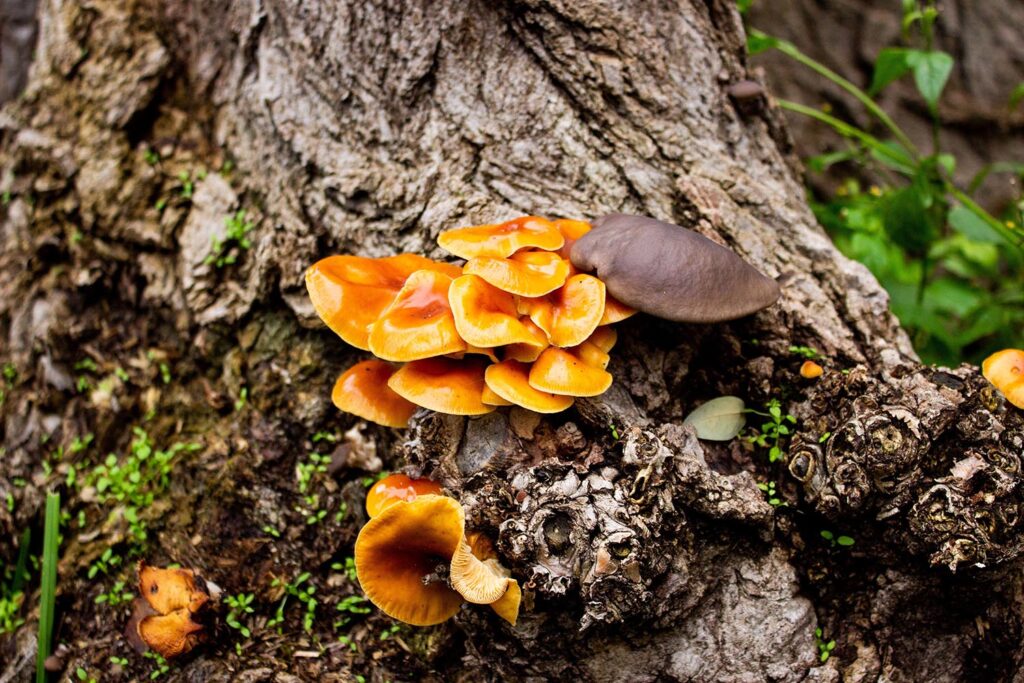
4. You See Fungus, Mushrooms, or Soft Wood Near the Trunk
Fungal growth near the base of a tree can be a warning sign, especially if mushrooms are growing from the trunk, root flare, or surrounding root zone. Fungi often feed on decaying wood, which may indicate internal decay or root problems.
Other signs of decay include:
- Soft, crumbly wood
- Hollow-sounding areas
- Large cavities
- Dark staining or oozing
- Sawdust-like material from insect activity
A tree might remain standing for years with decay, but that doesn’t mean it is structurally safe. If decay is near the base or main trunk, it should be assessed by a professional arborist or trained tree care professional.
5. There Are Dead, Brittle, or Falling Branches
Dead branches are a common sign of tree decline. They are a safety concern because they can fall during wind, rain, or even calm weather if they are brittle enough.
If dead limbs are hanging over a roof, driveway, play area, or other travelled space, don’t wait to address them. Proper pruning may be enough to reduce the risk if the tree is otherwise healthy.
6. The Tree Is Leaning or the Soil Is Lifting
A tree that has leaned for years may be stable. A tree that suddenly starts leaning is a different story.
A new lean can point to root failure or soil movement, especially after heavy rain or strong wind. Look for soil lifting on one side of the trunk, exposed roots, cracks in the ground, or a root plate that appears to be shifting.
If a leaning tree is near your house or another asset, treat it seriously. This is one of those things that can move from a simple tree health concern to an urgent safety risk quickly.
7. The Root Flare Is Buried or the Base Looks Unhealthy
The root flare is the area at the base of the tree where the trunk widens into the root system. It should be visible. If it is buried under mulch, soil, or years of landscaping buildup, the tree may develop long-term health problems.
Common issues around the base of a declining tree include:
- Mulch piled against the trunk
- Soil covering the root flare
- Girdling roots circling the trunk
- Soft or decayed bark near the ground
- Poor drainage around the root zone
This does not automatically mean the tree is dying, but it can contribute to decline. Root collar care may help in some cases if the issue is caught early enough.
Can a Dying Tree Be Saved?
Sometimes, yes. A tree that looks bad may still have a chance, especially if the problem is related to pruning needs, soil conditions, insects, disease, or root flare issues. Plant Health Care services may help address certain insect, disease, or soil-related concerns when treatment is appropriate.
Other times, removal is the safest option. If the tree has major decay, severe structural defects, extensive canopy death, or root failure, keeping it may create unnecessary risk.
The best next step is an honest assessment from. A tree care professional can help determine whether pruning, treatment, cabling and bracing, or removal makes the most sense.
Why Lancaster County Homeowners Should Act Early
Trees in Lancaster County deal with changing seasons, storms, wet spring weather, compacted soils, and landscape stress from construction, mowing, mulching, and nearby hardscapes. A tree that is already declining can become more vulnerable when summer storms arrive.
Waiting too long can limit your options. If a tree can be preserved, early action gives it a better chance. If it needs to be removed, addressing it before it fails can help protect your home and property.
Are You Worried Your Tree Is Dying?
If your tree is showing dead limbs, thinning leaves, bark loss, fungus, decay, or a new lean, Reaching Higher can help you understand what is happening and what to do next.
Request a free quote or call us 717-502-4707 to schedule an assessment with a professional tree care team serving Lancaster County and surrounding areas.