
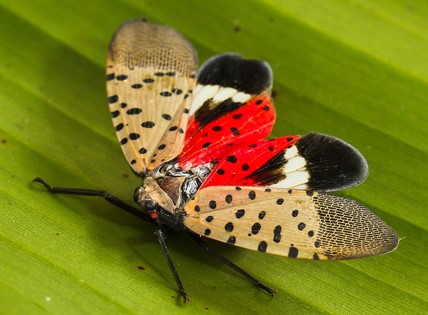
Spotted Lanternfly Treatment in Lancaster & Chester County
- Problem: Spotted lanternfly is an invasive pest that can stress trees and shrubs
- Best time to act: Early detection and timely treatment during the season
- Approach: Inspection, identification, and targeted treatment options
- Next step: Contact us or call 717-502-4707 to take action
Spotted Lanternflies in Your Yard
Spotted lanternflies have arrived, but early action can make a real difference. If you’re seeing lanternflies on your property, it’s a good time to get a plan in place to help reduce damage and limit spread.
Reaching Higher provides spotted lanternfly treatment and plant health care services throughout Lancaster and Chester County. When treatment is appropriate, services are performed by licensed professionals.
Why Spotted Lanternflies Are a Problem
Spotted lanternfly is a destructive, invasive pest that can stress plants by feeding in large numbers. Heavy infestations can contribute to decline, especially when plants are already stressed by drought, poor soil conditions, or other issues.
What homeowners often notice
- Clusters of insects on trunks and stems
- Sticky residue (“honeydew”) on surfaces below
- Sooty mold developing on leaves or patios due to honeydew
- Increased insect activity in late summer and early fall
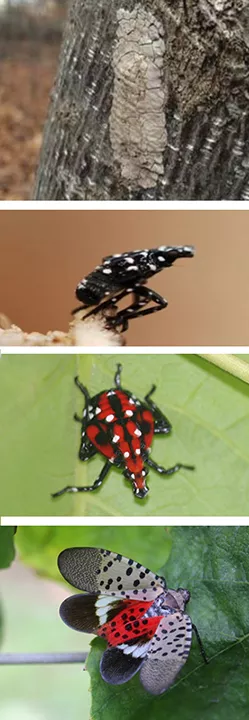
Spotted Lanternfly
Lifecycle
Beginning in early fall the adult lanternfly lays its eggs on tree bark, in nooks and crannies on buildings, on outdoor gear (lawnmowers, grills, etc), and on vehicles.
Spotted lanternfly egg sacks are about an inch long and look like a smear of mud. If found in an infested area, residents should crush them and scrape them off.
- October-June: eggs
- May-June: b&w nymphs
- June-August: red nymphs
- July-December: adults
How to Identify Spotted Lanternfly
Spotted lanternflies go through multiple life stages, and they don’t look the same all year.
Common identifiers of Spotted Lanternflies:
- Egg masses: Mud-like patches on trunks, outdoor furniture, stones, and other surfaces
- Nymphs: Small, active insects that may appear dark with light spots early on
- Adults: Distinctive wing pattern; often seen in large numbers later in the season
If you’re not sure what you’re seeing, we can help confirm identification during an inspection.
What to Do If You See Spotted Lanternflies
If lanternflies are showing up on your property, the worst thing to do is ignore it until you’re seeing heavy numbers.
First Steps You Can Take:
- Avoid moving firewood or outdoor items from infested areas
- Check common surfaces for egg masses
- Keep an eye on trees, shrubs, and outdoor gathering areas
- Contact a professional if you’re seeing repeated activity or large clusters
Our Spotted Lanternfly Treatment Approach
Every property is different, and effective control starts with knowing what you’re dealing with and where the activity is happening.
What our team may do for Spotted Lanternflies:
- Inspect your trees and shrubs for signs of activity
- Help identify likely host plants and risk areas
- Recommend practical next steps based on timing and severity
- Provide targeted treatment options when appropriate
Our goal is to protect your trees and shrubs while using an approach based on clear information, customer education, and situational needs.
How Treatment Timing Works
Treatment timing matters. Depending on the season and life stage, different strategies may be more effective.
Why timing matters
- Early-season activity can require a different approach than peak late-season swarms
- A plan may involve more than one visit depending on severity
- Treatment decisions should be based on what is present and what is at risk
If you contact us now, we can help you take action before the season is over and damage becomes more significant.
Why Choose Reaching Higher?
Reaching Higher is committed to clear information, testing-based recommendations, and customer education. We don’t recommend chemical treatment unless it’s needed, and we avoid indiscriminate cover sprays.
When treatment is appropriate, applications are carefully targeted and performed by licensed professionals.
Spotted Lanternfly FAQs
Do you offer spotted lanternfly treatment?
Yes. We offer spotted lanternfly treatment options as part of our plant health care services.
Are you licensed for treatment applications?
Yes. When treatment is appropriate, services are performed by licensed professionals.
Can you treat a severe infestation in one visit?
It depends on the timing, severity, and what’s being impacted. In some cases, more than one visit may be recommended.
What’s the best time to start?
As soon as you notice consistent activity. Early action can help reduce stress and limit spread.
Do you guarantee the lanternflies will be gone?
Spotted lanternfly is a regional invasive pest, so results depend on timing, severity, and surrounding pressure. We focus on targeted, practical strategies to reduce impact and protect your plants.
What is a spotted lanternfly?
The Spotted Lanternfly (Lycorma delicatula) was first detected in Pennsylvania in September 2014. It feeds voraciously on a wide range of fruit, ornamental, and woody trees and shrubs. Spotted lanternflies are an invasive species and if allowed to spread in the United States, this pest will cause serious harm to the country’s landscaping, fruit orchard, and logging industries. Spotted lanternflies can’t fly long distances, but they attach themselves to travelers and vehicles to spread more quickly into new regions.
Where did spotted lanternflies come from?
The spotted lanternfly is believed to have been transported into the U.S. on a stone shipment from China in 2012. Because they aren’t native to North America, they have few natural predators here and are spreading unchecked throughout the northeast.
Are spotted lanternflies dangerous?
Spotted lanternflies aren’t dangerous to humans or pets — they don’t bite or sting and they aren’t venomous. But they do pose a serious risk to agriculture.
What attracts spotted lanternflies?
Spotted lanternflies are primarily attracted to Ailanthus (Tree of Heaven) plants, but they also attack rose bushes, grape vines, walnut, birch, willow, and maple trees. They are known to infest and attack 56 plant species in North America.
How to get rid of spotted lanternfly swarms
In summer and fall, spotted lanternflies can gather in large numbers around trees, poles, sidewalks, houses, and buildings. Anyone who has tried to eliminate these pests knows that once spotted lanternflies establish themselves in an area, they are difficult to combat. Therefore, if you find spotted lanternflies around your home, we recommend killing them immediately to keep them from spreading.
The experts at Reaching Higher have many years of experience and know how to get rid of spotted lanternfly swarms quickly and efficiently.
How to kill spotted lanternflies
There are two potential solutions for dealing with spotted lanternflies on your property: either by physically destroying the lanternflies in whatever life stage you find them (swatting nymphs and adults, scraping away egg sacks and crushing them) or by immediate removal with an approved insecticide.