Plant Health Care Services in Lancaster & Chester County
- Best for: Declining trees/shrubs, insect issues, disease concerns, poor soil conditions
- Approach: Inspection, testing-based recommendations, and targeted treatments
- Licensed: Treatments performed by licensed professionals
- Next step: Request a free quote or call 717-502-4707
What Is Plant Health Care?
Plants, like all living things, are susceptible to nutritional deficiency, insect damage, and disease. Proactive plant health care involves determining which environmental factors, if any, need to be changed to promote plant health and longevity.
Reaching Higher inspects your plants and provides expert recommendations even before problems become significant. Plant health care can include treating for insects and diseases, assessing soil and site conditions, and making beneficial adjustments where possible and practical.
When to Call a Plant Health Care Technician
If something feels off, it’s usually worth getting eyes on it early.
Common reasons homeowners reach out:
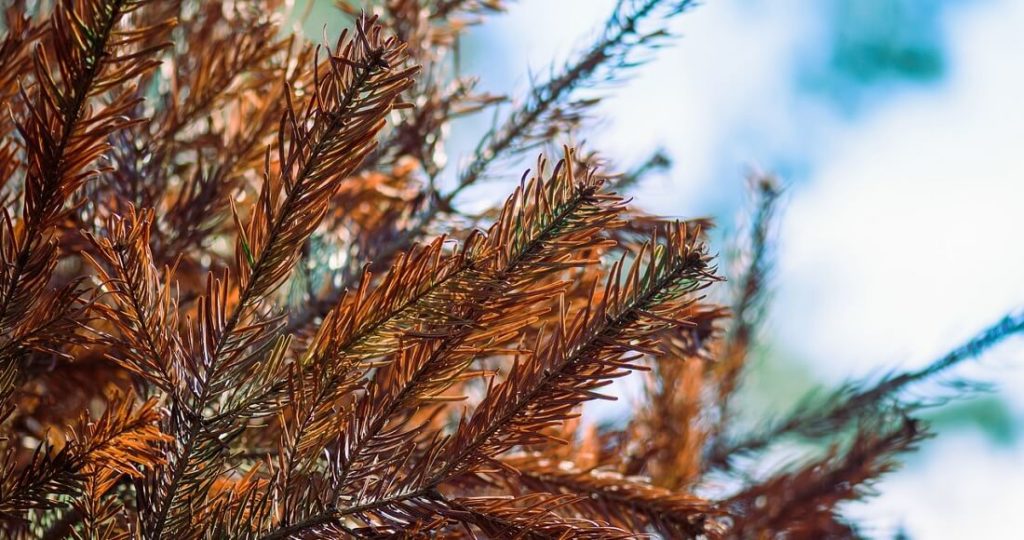
- Thinning canopy, leaf discoloration, or poor growth
- Dieback or dead branches developing over time
- Signs of insect activity (holes, honeydew, webbing, clusters)
- Fungus, leaf spots, or repeated seasonal decline
- Poor drainage, compacted soil, or struggling landscape beds
Our Plant Health Care Services
Our Plant Health Care Technicians specialize in:
- Soil health care
- Tree and shrub insect and disease treatments
- Root collar care
Soil Health Care
Soil health care begins with testing and assessing current soil conditions and providing recommendations based on situational plant health care needs. Initial services often begin with a one-time visit. Depending on ongoing soil condition factors, additional services may be recommended.
Common soil problems
- Compacted soil
- Lack of organic matter
- Insufficient nutrient levels
- Excessive clay
Soil health care options may include
- Soil sampling
- Soil aeration/decompaction
- Beneficial supplements (fertilizer, organic matter, biochar, etc.)
Tree and Shrub Insect and Disease Treatments
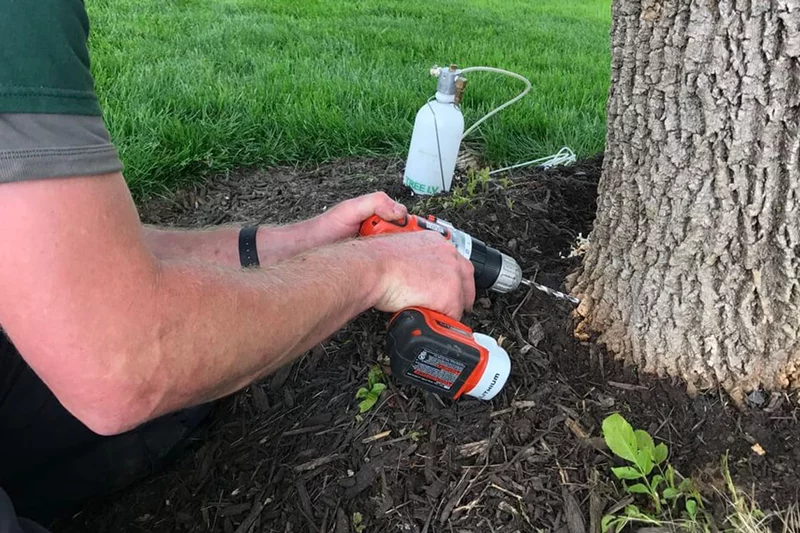
If trees and shrubs are being attacked by insects or plant-borne diseases, the problem can sometimes be alleviated with spray treatments. This can include pests such as bagworms, spotted lanternflies, mites, and various plant-damaging scale insects.
Treatments may need to be applied once or twice a season depending upon the severity of the problem.
When treatment is appropriate, our team provides targeted applications and practical recommendations based on what your landscape actually needs.
Root Collar Care
Root collar maintenance is an important part of tree health care. The base of a tree trunk where the trunk begins to widen is known as the root collar or root flare. If the root collar is buried too deep or covered by mulch, roots can grow against the trunk and encircle it, becoming girdling roots or circling roots that can hinder water and nutrients from freely moving through the tree.
Proper planting is vitally important to long-term tree health care. If a tree is planted too deep, we can use specialized tools to excavate soil and mulch from around the base of the tree and remove any girdling roots to help remedy the problem.
Root collar care options may include
- Diagnosing
- Root pruning
- Air spading
Why Choose Reaching Higher?
Reaching Higher is committed to clear information, testing-based recommendations, and customer education. We won’t just sell you a generic fertilizer program. We diagnose and provide for the needs of your soil and plants based on what we find.
We also avoid indiscriminate cover sprays. When treatment is required, our applications are carefully targeted, and we use methods intended to reduce unnecessary impact on beneficial insects.
Our team will give your plants and trees the devoted care they need and deserve.
Plant Health Care Frequently Asked Questions
Do you offer treatments for insects and diseases?
Yes. We provide plant health care services that can include insect and disease treatments when needed.
Are you licensed to perform plant health care treatments?
Yes. When treatment is appropriate, services are performed by licensed professionals.
Do you always recommend chemical treatments?
No. Our approach is based on inspection and situational needs. We focus on practical recommendations and targeted treatments rather than blanket applications.
Do you offer soil testing and soil improvement services?
Yes. Soil sampling, aeration/decompaction, and beneficial supplements may be recommended depending on site conditions.
What is a root collar/root flare and why does it matter?
The root collar is where the trunk widens at the base. If it’s buried or covered too deep, it can contribute to girdling roots and long-term decline.