A fresh layer of mulch can make a landscape look clean, polished, and well cared for. Done correctly, mulch also helps trees hold moisture, moderate soil temperature, and reduce weed competition. Done poorly, it can slowly create the very problems homeowners are trying to avoid.
That brings us to the mulch volcano.
If you have ever seen a tree with mulch piled high against the trunk like a cone or mountain, you have seen “the mulch volcano.” It is extremely common in residential and commercial landscapes because, at a glance, it looks neat and intentional. The trouble is that mulch piled against the trunk can trap moisture, hide the root flare, and contribute to long-term decline. Penn State Extension advises keeping mulch away from the trunk, leaving the root flare visible, and limiting mulch depth rather than piling it up into a mound.
Learn more about mulching around trees.
What Is a Mulch Volcano?
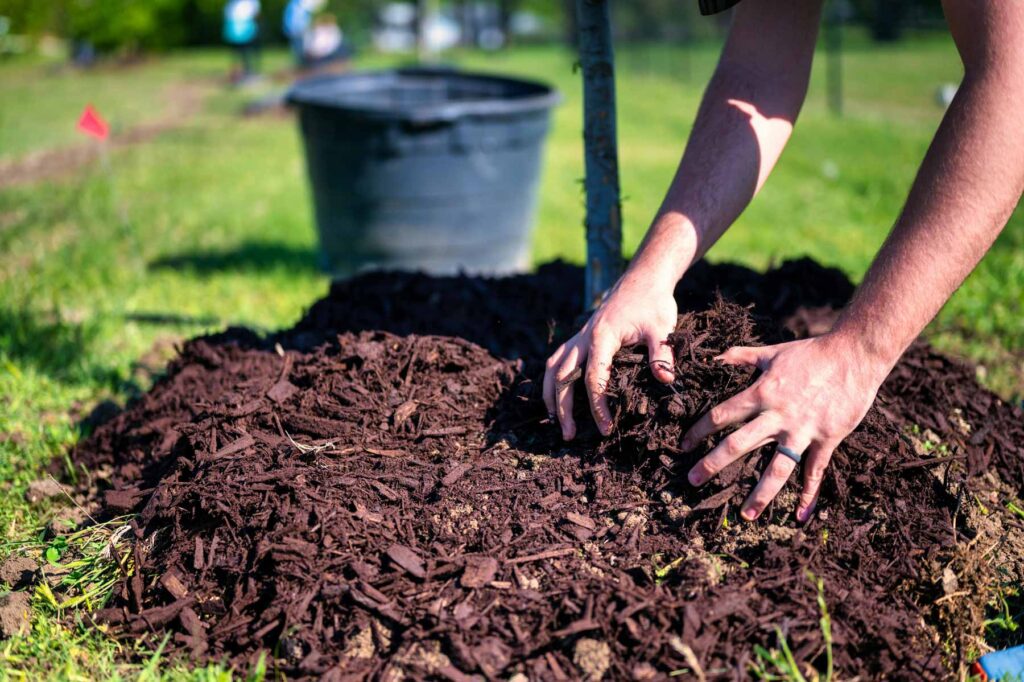
A mulch volcano is exactly what it sounds like: mulch piled up around the base of a tree, often several inches deep and pressed directly against the bark. Instead of a flat, wide ring, the mulch forms a raised cone around the trunk.
People usually do this with good intentions. They want to suppress weeds, protect the base of the tree from mowers, or make the bed look freshly maintained. The problem is that tree trunks are not meant to stay buried under damp mulch. What looks tidy from the curb can create stress where the tree is most vulnerable.
Learn more about mulch volcanoes.
Why Mulch Volcanoes Are Bad for Trees
The biggest issue is moisture where it does not belong. Bark at the base of the trunk is not designed to stay constantly damp. When mulch is piled against it, that area can remain wet for too long, which increases the chance of decay and other complications.
Mulch volcanoes can also hide the root flare, which is the natural widening at the base of the trunk where the tree transitions into roots. That flare should be visible. When it stays buried under excess mulch, the tree’s base can effectively be smothered over time.
Another problem is that bad mulching habits often go hand in hand with repeated over-application. Year after year, a little more mulch gets added, and eventually the tree is sitting in a deep mound that is far thicker than intended. The result is often slow decline, not instant death. That delayed damage is one reason this mistake persists. The tree may look fine for a while, even while stress is building.
Signs a Tree May Be Suffering from Over mulching
A tree with too much mulch might not show obvious symptoms right away. Still, there are a few warning signs homeowners should watch for:
- Mulch piled directly against the bark
- No visible root flare at the base of the trunk
- Mushy, decayed, or darkened bark near the soil line
- Small roots growing up into the mulch around the trunk
- Thin canopy growth or general decline over time
- Fungal growth or persistent moisture at the base
Sometimes the issue is not just the mulch volcano itself, but the fact that it hides deeper planting or root flare problems that were already present.
What Proper Tree Mulching Should Look Like
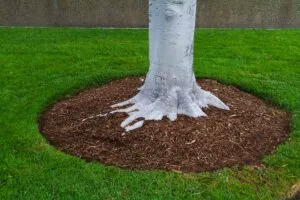
Good mulching is much less dramatic. Think wide and flat, not tall and tight.
A properly mulched tree should have:
- A visible root flare
- Mulch spread in a broad ring around the tree
- A moderate mulch depth rather than a deep pile
- Open space between the trunk and the mulch itself
In other words, the shape should look more like a donut than a volcano.
If you are mulching around young or newly planted trees, this matters even more. Early mistakes around the base of a tree can affect how it establishes and grows.
Can You Fix a Mulch Volcano?
Usually, yes. In many cases, the first step is simply pulling the mulch back away from the trunk and reducing the depth so the base of the tree can breathe again. If the root flare has been buried for a long time, more careful work may be needed to expose it properly without damaging the tree.
That is where homeowners sometimes make a second mistake. They start digging aggressively around the trunk without knowing where the flare begins, whether there are girdling roots present, or whether decay is already underway.
If the mulch has been piled high for years, or if the tree already looks stressed, it is smart to have a tree care professional assess it before turning it into a DIY excavation project.
Why Lancaster and Chester County Properties Must Avoid the Mulch Volcano
Around this part of Pennsylvania, many properties have mature landscape trees that add real value, shade, and charming character. Unfortunately, mature trees are also the ones most likely to get landscaped to death over time with repeated mulch buildup, root flare burial, and deferred maintenance.
That is part of why this is such a hot topic this time of year. A mulch volcano is not just a cosmetic mistake. It can contribute to the decline of a tree you may have spent years trying to preserve. And if that tree is near your house, driveway, patio, or walkway, delayed decline can eventually turn into a much larger safety and cost issue.
When to Call a Professional Arborist
If you have noticed mulch piled against your tree trunks, or if you are not sure whether the root flare is buried, it may be time to get a second set of eyes on it.
Reaching Higher can help evaluate whether the issue is simply cosmetic, whether the tree needs root collar care, or whether there are bigger health or structural concerns hiding under the mulch. Sometimes the fix is simple. Sometimes the mulch volcano is only one symptom of a deeper problem.
Want to Give Your Trees a Better Start?
If your trees have been buried in mulch, or you want help making sure they are cared for the right way, Reaching Higher can help. Request a free quote or call 717-502-4707 to have your trees assessed by a professional arborist.